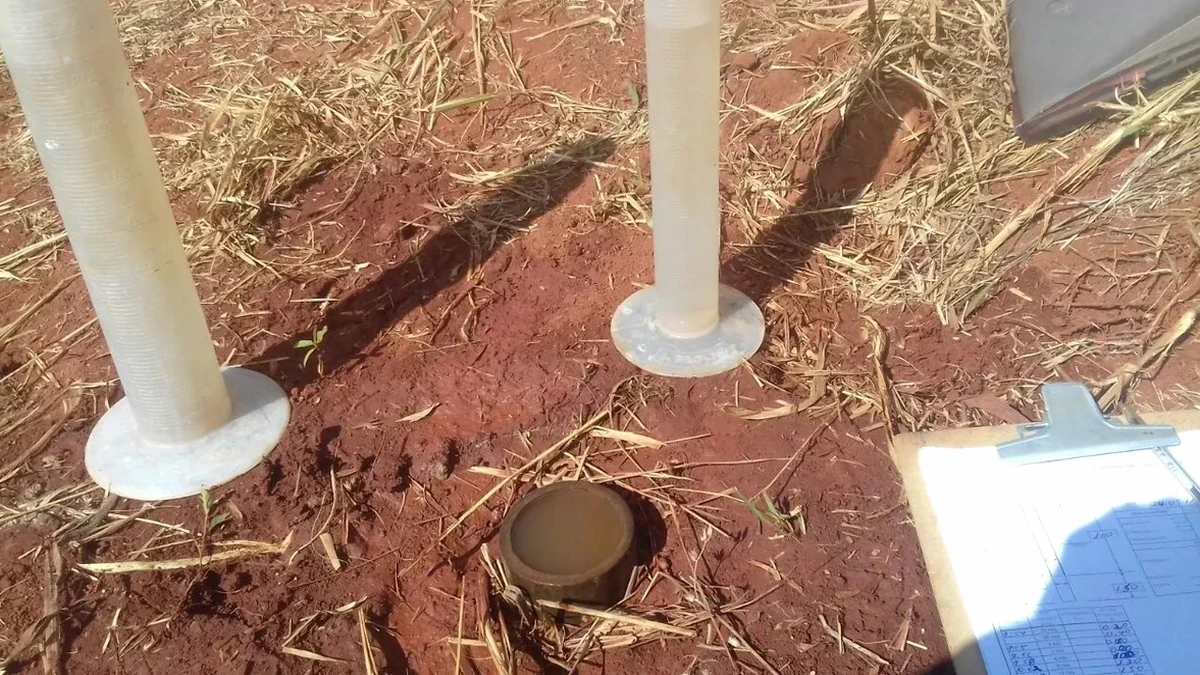
Galway's expansion eastward from the medieval walls has moved construction onto ground that demands a careful look below the surface. The city sits on a complex mix of Carboniferous limestone, glacial tills deposited during the last ice age, and pockets of alluvial gravels along the River Corrib's floodplain. This geology makes groundwater behaviour unpredictable. A contractor near Merlin Park might find weathered rock at three metres, while a site in Knocknacarra hits sandy gravels with a water table barely a metre down. In our expertise, a standard borehole log tells only half the story. To design dewatering systems or predict settlement, we need the actual hydraulic conductivity of the ground, and that's where the Lefranc test in soils and the Lugeon test in rock become the only reliable approach. The work pairs naturally with a trial pitting programme when the overburden is shallow, letting us visually confirm the transition to bedrock before committing to packer testing at depth.
A Lugeon value of less than one may indicate a tight rock mass, but in Galway's karst limestone, isolated conduits can produce values above twenty that demand a radically different grouting approach.
Local ground factors
The glacial tills across Galway are deceptive. A stiff, stony matrix can look competent in a trial pit, but the permeability often jumps by an order of magnitude where lenses of sand and gravel are trapped within it. We've seen excavations near the Corrib fill faster than the sump pumps could handle because a thin gravel seam, invisible in the borehole log, was acting as a direct conduit from the river. The risk is not just about inflow volumes. In fine-grained tills, rapid drawdown during pumping can trigger internal erosion of silt-sized particles, leading to piping failures that undermine adjacent footings. On rock sites, particularly in the karst limestone that underlies much of the city centre and Ballybrit, an undetected open joint or small cavity will skew a Lugeon result completely. That's why we run the full pressure cycle described by Houlsby's method, watching for turbulent flow that signals a conduit rather than laminar seepage through a tight fracture network. Missing that distinction has real consequences, from under-designed grout curtains to unstable deep excavation slopes that start spalling when groundwater pressure builds behind them.
Reference standards
IS EN ISO 22282-2:2012 (Geotechnical investigation and testing — Geohydraulic testing — Part 2: Water permeability tests in a borehole using open systems), IS EN ISO 22282-3:2012 (Geohydraulic testing — Part 3: Water pressure tests in rock), IS EN 1997-2:2007 (Eurocode 7: Geotechnical design — Part 2: Ground investigation and testing, with Irish National Annex), Houlsby, A.C. (1976) Routine interpretation of the Lugeon water-test, adapted for Irish karst conditions, UK Ciria C515: Groundwater control — design and practice, commonly referenced in Ireland
Common questions
What is the difference between a Lefranc test and a Lugeon test?
A Lefranc test measures permeability in soils by adding or removing water from a standpipe and monitoring the water level recovery. It gives us hydraulic conductivity in metres per second. A Lugeon test is specific to rock. We isolate a section of a borehole with inflatable packers and inject water under pressure in stages. The result is expressed in Lugeon units, where one Lugeon is roughly one litre of water per metre of test section per minute at ten bars of pressure. In Galway's mixed ground, we often run both on the same borehole: Lefranc in the overburden and Lugeon once we hit limestone.
How much does a field permeability test cost in Galway?
The cost for a Lefranc or Lugeon test programme typically ranges from €500 to €870 per test interval, depending on the number of tests, borehole depth, and access conditions. A single isolated test in a shallow borehole will sit at the lower end of that range. If we are setting up a multi-level packer system in deep rock with crane access required, the cost moves toward the upper end. We carry out a fixed-price quotation after reviewing the site investigation plan.
When is a Lugeon test required instead of a Lefranc test?
As soon as the borehole encounters rock, the Lefranc method stops being applicable because the test section cannot be properly sealed against the borehole wall. A Lugeon test uses packers that expand against the rock to isolate a specific interval. We specify a Lugeon test whenever the design involves rock sockets for piles, foundation drainage in limestone, grout curtain design, or assessing the need for pre-excavation grouting in fractured rock. In areas like Ballybrit where the limestone is heavily jointed, the Lugeon data is essential.
How long does a permeability test take on site?
A single Lefranc test in soil typically takes between one and two hours, including the time for the water level to stabilise. A Lugeon test in rock runs longer because we test at five pressure stages, each held until the flow rate stabilises, which can take thirty to sixty minutes per stage. A complete Lugeon test on one five-metre interval usually takes three to four hours. If we are testing multiple intervals in a deep borehole, the work will span a full day or more, particularly if packer repositioning requires a crane.