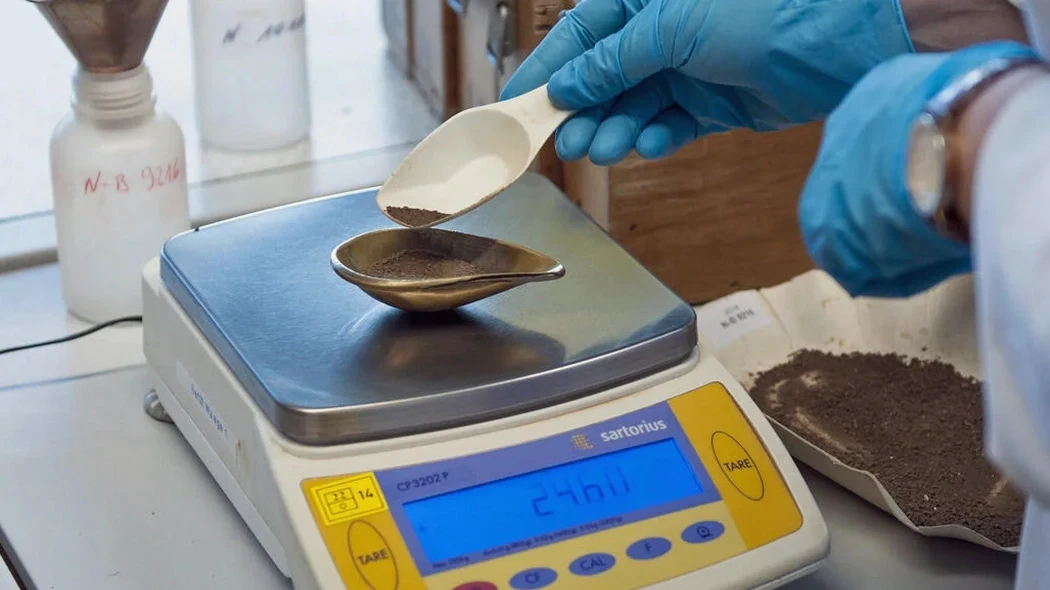
The application of IS EN ISO 17892-4:2016 for particle size distribution is not a mere formality in Galway; it is a fundamental step for any geotechnical interpretation on the city's complex glacial deposits. Our laboratory, operating under ISO 17025 accreditation, processes samples extracted from the drumlins, eskers, and alluvial plains that define Galway's geography—from the limestone terraces in Menlo to the peat pockets scattered west of the Corrib. A complete granulometric curve, integrating mechanical sieving for the coarse fraction and hydrometer analysis for silts and clays, allows the engineering behaviour of the material to be anticipated before placing a single foundation element. In a city where the water table fluctuates with the tides of Galway Bay, understanding the percentage of fines is what distinguishes a free-draining granular fill from a frost-susceptible or liquefiable soil. When the particle distribution reveals a gap-graded material, the triaxial testing programme must be adjusted to reflect the true effective friction angle, not an assumed value.
In Galway's glacial terrain, the hydrometer test is not a supplementary check; it is the data point that reveals whether your 'granular' soil will behave as a silt under load.
Local ground factors
A recurring error we observe in small-scale residential developments on the eastern outskirts, near Oranmore, is proceeding with footing design using only a visual-manual classification. A builder may describe the material as 'boulder clay' and assume a bearing capacity, but without a sieve and hydrometer curve, the proportion of silt matrix remains unknown. This is the parameter that governs undrained behaviour during the rainy winters Galway endures—with average annual precipitation exceeding 1,100 mm. We have seen cases where a soil logged as sandy gravel actually contained over 15% plastic fines, requiring a complete redesign of the footings geometry and depth. The hydrometer sedimentation test, carried out with a dispersing agent following IS EN ISO 17892-4, reveals the clay fraction that controls cohesion and, crucially, the potential for volumetric change. Ignoring the fine end of the curve in Galway's glacial till means exposing the structure to differential settlement that only becomes apparent after the first season of water table rise.
Common questions
What is the typical cost for a combined sieve and hydrometer test on a Galway soil sample?
For a single sample undergoing the full particle size distribution per IS EN ISO 17892-4, the cost ranges from €100 to €190. The variation depends on the proportion of coarse material requiring larger sieve stacks and the sedimentation time needed for the hydrometer phase. We carry out a firm quote once we know the sample's expected gradation.
Why is the hydrometer test necessary if the soil looks sandy?
A visual assessment cannot quantify the silt and clay fraction below 63 μm, which is precisely what controls drainage, frost susceptibility, and cohesion. Sands in Galway, particularly those from the esker deposits, often contain a silty binder that is invisible to the naked eye. The hydrometer sedimentation curve, interpreted with Stokes' law, reveals whether the fines are inert silt or active clay—a distinction that has direct consequences for slope stability calculations on embankments.
How much sample material do you need for a complete grain size analysis?
For a combined test, we require a minimum of 5 kg for soils containing gravel and cobbles, or 500 g for material entirely passing the 2 mm sieve. The sample must be representative and preferably undisturbed in a sealed bag to preserve the natural moisture content. For projects in Galway, our team can coordinate sampling at your borehole or test pit location to ensure chain of custody.
Can the grain size curve be used to estimate permeability?
Yes, empirical methods such as the Hazen formula can estimate the coefficient of permeability from the D10 effective grain size for clean sands. However, for the silty tills common from Salthill to Dangan, these estimates are unreliable. In those cases, we recommend direct measurement via in-situ permeability testing, which accounts for the soil's structure and density—factors that a remoulded sieve sample cannot capture.