← Home · Underground Excavations

Geotechnical Design of Deep Excavations in Galway

Together, we solve the challenges of tomorrow.

LEARN MORE →

Galway’s subsurface is dominated by glacial till overlying limestone bedrock, a legacy of the last Ice Age that left the city sitting on dense, stony clay with erratic boulders. The Corrib River and its estuary add a layer of complexity: groundwater levels can rise to within 1.5 metres of the surface in the city centre, turning any excavation deeper than 3 metres into a dewatering challenge. Designing a deep excavation here without accounting for the transition from till to karstified limestone is a direct path to instability. We approach each project by first mapping the till matrix—its cohesion and boulder frequency—and then modelling the groundwater flow paths that make Galway’s geology unpredictable. For schemes near the docks or along the river corridor, integrating data from a CPT test provides a continuous profile of the soft alluvial lenses that often go undetected in borehole logs.

In Galway’s glacial till, the difference between a stable cut and a collapse often comes down to how you model a single water-bearing fissure.

Process and scope

A mistake we see repeatedly in Galway is applying standard propped wall designs without adjusting for the high lateral stiffness of the local lodgement till. Contractors assume a soft clay model, but the dense Galway till can develop significant arching, reducing loads on the lower props—until a water-bearing fissure is hit, and the pressure distribution flips. Our design process is built around BS EN 1997-1:2004 with the Irish National Annex, using characteristic values derived from site-specific lab work. We include undrained and drained analyses for the till, and explicitly model the limestone pinnacles that can concentrate stress at the base of a retaining wall. When the excavation footprint is wide, a plate load test on the exposed till surface gives us the deformation modulus needed to refine the heave prediction and optimize the strut levels.
Geotechnical Design of Deep Excavations in Galway
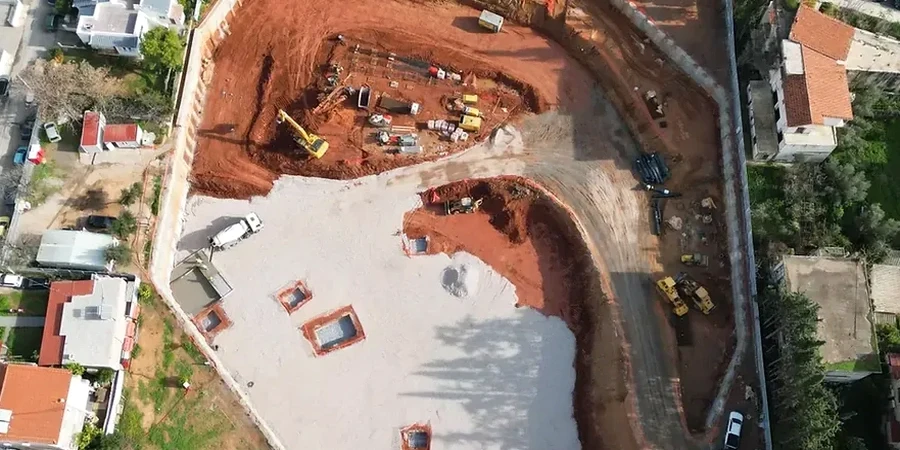
Technical reference image — Galway

Local ground factors

In Galway, we often see groundwater ingress concentrated at the till-rock interface, where the limestone’s solution channels act as conduits. This isn’t bulk permeability—it’s preferential flow that standard pumping tests miss. A design that overlooks this can lead to base heave or sudden loss of passive resistance behind the wall. We mitigate this by combining piezometer arrays with packer testing to isolate the weathered rock zone. Another local risk is the vibration sensitivity of the medieval city core: adjacent masonry buildings require deflection limits tighter than the 0.5% of excavation depth typically allowed by CIRIA C760. Our models incorporate small-strain stiffness parameters from bender element testing to keep surface settlements below 10 mm on sensitive streets like Quay Street or High Street.

Need a geotechnical assessment?

Reply within 24h.

Email: contact@geotechnical-engineering.co

Technical data

ParameterTypical value
Design standardEN 1997-1:2004 + Irish NA
Typical till cohesion (c')0–5 kPa
Typical till friction angle (φ')32°–38°
Groundwater control methodDeep well / ejector systems
Max excavation depth analyzedup to 25 m
Retaining systems modeledDiaphragm walls, secant piles, sheet piles
Rock socket verificationUnconfined compressive strength (UCS) testing

Complementary services

01

Retaining Wall Design

Analysis of diaphragm walls, secant pile walls, and sheet pile cofferdams, with staged excavation modelling and strut/anchor optimization for Galway’s dense glacial till.

02

Groundwater Control Plan

Design of dewatering systems—from wellpoint arrays to deep wells—accounting for the karstic flow paths in the underlying limestone.

03

Settlement and Damage Assessment

Non-linear FE analysis to predict ground movements and assess potential damage to adjacent structures, calibrated with small-strain stiffness data.

04

Construction Stage Monitoring

Design of inclinometer, piezometer, and settlement marker arrays, with trigger levels tied to the observational method per EN 1997-1.

Reference standards

IS EN 1997-1:2004 (Eurocode 7: Geotechnical design), IS EN 1997-2:2007 (Ground investigation and testing), IS EN 1993-5:2007 (Steel piling), CIRIA C760 (Guidance on embedded retaining wall design), National Annex to IS EN 1997-1 (Ireland-specific parameters)

Frequently asked questions

What is the typical cost range for geotechnical design of a deep excavation in Galway?

The design fee depends on excavation depth and complexity. For a typical basement or infrastructure cut in Galway, the engineering design work ranges from €1,730 for a straightforward single-level excavation to around €7,960 for a multi-level structure with complex groundwater control and adjacent building protection.

Which retaining system works best in Galway’s glacial till?

Diaphragm walls and secant pile walls perform well because they can be socketed into the limestone to cut off groundwater flow at the till-rock interface. Sheet piles are effective at shallower depths but may encounter refusal on boulders.

How do you handle the risk of hitting karst features during excavation?

We include a karst risk register in the Ground Investigation Report, using probe drilling ahead of the excavation face. The design includes contingency measures for grouting solution channels if they are encountered.

What software do you use for deep excavation analysis?

We use Plaxis 2D/3D for finite element modelling and WALLAP for limit equilibrium analysis of embedded walls. Both are calibrated with site-specific lab data from triaxial and oedometer tests.

Is the observational method acceptable for deep excavations under Eurocode 7?

Yes. We design the monitoring plan and define trigger limits for deformation and groundwater levels. If monitoring data stays within limits, the design is validated; if not, contingency measures are implemented immediately.
Location and service area

We serve projects in Galway and surrounding areas.

View larger map